
Claire de Lune on Hammer Hill (2012)
for orchestra
commissioned by the Hong Kong Sinfonietta
for Orchestra
Commissioned by the Hong Kong Sinfonietta

Jason Lai and the Hong Kong Sinfonietta, at the Hong Kong City Hall Theatre
Team
2 Flutes (2nd doubling Piccolo), 2 Oboes, 2 B-flat Clarinets, 2 Bassoons, 2 Horns, 2 Trumpets, Trombone, Timpani, Percussion (one player), Strings
Preface
Clair de Lune on Hammer Hill (2012) is a setting of a well-known Cantonese folksong. The work was commissioned by the Hong Kong Sinfonietta, and was first performed by the orchestra on June 15, 2012, at the Hong Kong City Hall Theatre, with Jason Lai, conductor.
Heard
June 15-17, 2012 Hong Kong Sinfonietta, Jason Lai, conductor; Hong Kong City Hall Theatre
Transfiguration Sunday (2012)
for mixed chorus, handbells, string quartet and organ
commissioned by Christ Church United Methodist (New York, NY)
Anthem for Mixed Chorus, Handbell Choir, Organ and String Quartet
Commissioned by Christ Church United Methodist (New York, NY)
Team
Mixed Chorus (SATB), Handbell Choir, Organ, String Quartet
Preface
Transfiguration Sunday was written for the occasion, and was commissioned by Christ Church United Methodist in New York City. Christ’s transfiguration on a mountain to Peter, James and John is celebrated on the final Sunday of the Epiphany season, and marks the transition between Epiphany and Lent. The text is taken from the transfiguration accounts in the synoptic gospels (King James Version).
The work was written specifically for the Christ Church Choir and Handbell Choir, as well as the church’s 1960 Casavant Frères organ, accompanied by a string quartet. The featured soloist on the recording is baritone Robert Maril.
Heard
June 3, 2012, Christ Church United Methodist (New York, NY). Dr. Steven Pilkington, conductor, Ryan Jackson, organ, Cory Davis, conductor (handbells ensemble), Robert Maril, baritone.

The Love Song of Mary Flagler Cary (2012)
libretto by Benjamin Rogers
for two sopranos, baritone, two violas, and piano

Rhymes With Opera in performance at Mary Flagler Cary Hall, The DiMenna Center for Classical Music (June, 2012)
Team
Two sopranos, baritone, two violas and piano
Preface
The Love Song of Mary Flagler Cary was written for Rhymes With Opera, for its 2012 mainstage production in New York and New Haven The New York venue was the Mary Flagler Cary Hall at the new DiMenna Center for Classical Music, and I wanted to write a piece that would be intimately connected to the namesake of the hall where it will be premiered. Mary Flagler Cary was heiress to the Henry Flagler’s Standard Oil fortune, and she established the Mary Flagler Cary Charitable Trust, which funded music, among many other disciplines. The Love Song of Mary Flagler Cary is a meditation on Mary’s life, the spirit of collecting, and the cycle of beginnings and endings for Henry, Mary, their estate, and the Charitable Trust, which winded up operations in 2009.
Special thanks to the Cary Institute for Ecosystem Studies for allowing Rhymes With Opera to use he portrait of Mary Flagler Cary as a part of the performance of this work.
Heard
June 9, 2012 Mary Flagler Cary Hall at the DiMenna Center for Classical Music (New York, NY)
June 10, 2012 The Big Room (New Haven, CT)
The Person In The Room Wishes To Be Left Alone (2011)
Words by Benjamin Rogers
For Soprano, Saxophone and Tape
Commissioned by the Emerging Voices Project
Libretto by Benjamin Rogers
For Soprano, Saxophone and Tape
Commissioned by the Emerging Voices Project
Team
Soprano, Alto Saxophone, Fixed Media Playback (most likely a CD)
Preface
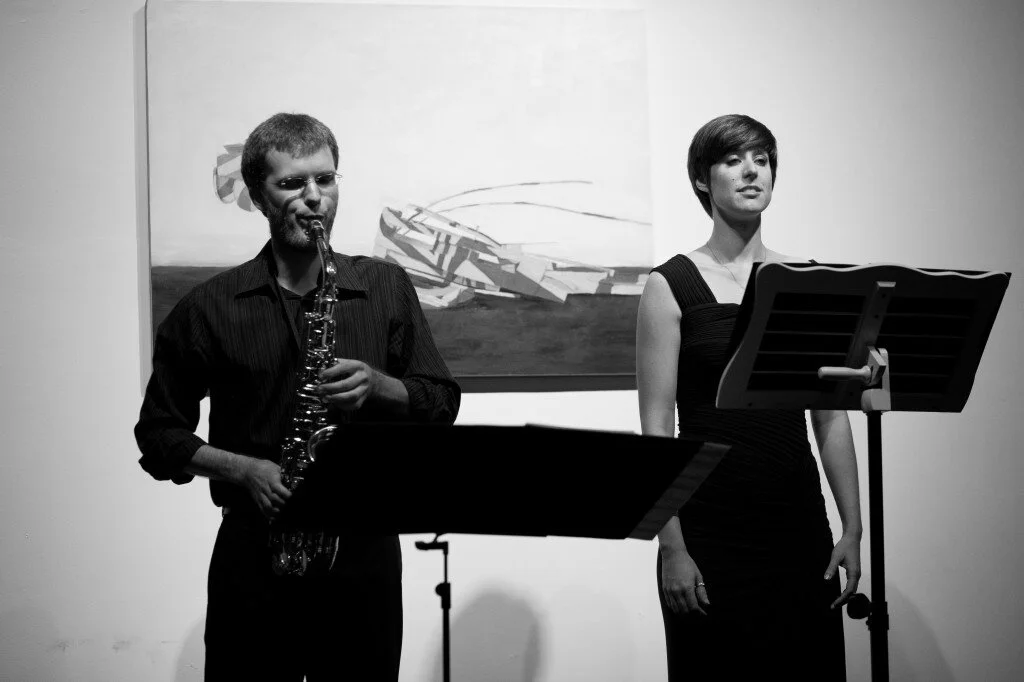
The Person In The Room Wishes To Be Left Alone is a set of miniatures for soprano, alto saxophone and tape, and takes as its subject both the real-life child prodigy author Barbara Follett and the character of Margot Tenenbaum in Wes Anderson’s film The Royal Tenenbaums, on a libretto by Benjamin Rogers.
The work was commissioned by and is dedicated to Elisabeth Halliday and Zach Herchen, as a part of the Emerging Voices project. The commission was funded by Ted Esborn.
Heard
February 4, 2012, Enoch Pratt Free Library (Baltimore, MD), Elisabeth Halliday, soprano and Zach Herchen, saxophone.
January 20, 2012, George Mason University (Fairfax, VA), Elisabeth Halliday, soprano and Zach Herchen, saxophone.
September 25, 2011, Gershwin Hotel (New York, NY), Elisabeth Halliday, soprano and Zach Herchen, saxophone.
September 18, 2011, Follen Church (Lexington, MA), Elisabeth Halliday, soprano and Zach Herchen, saxophone.

Suite for Cello (2011)
commissioned by the Gesher Music Festival

Sara Sitzer, cello. World Premiere of the “Suite for Cello” at the Gesher Music Festival of Emerging Artists, June 2011.
“Whiff”, by Isodoc Dance Group, with “Suite For Cello”. In performance at the Center for Performance Research in Brooklyn, NY, 2017.
Team
Cello
Preface
Suite for Cello was commissioned by Sara Sitzer for the inaugural Gesher Music Festival of Emerging Artists, which featured music that connects classical chamber music and the Jewish perspective. As my contribution to the festival’s program, this suite is both a conversation with my favorite solo cello repertoire (including music by Bach, Britten and Ligeti) as well as a conversation with the Jewish tradition itself.
The four movements of the Suite are:
Nocturne
Elijah and the Rabbi on the World To Come
Shall the horn sound and the people not tremble
Serenade
The suite contains four movements. The Nocturne and Serenade – two “night-songs” – open and close the work, recalling the cycles of sunrise and sunset, natural events that both begin and end a day of ritual and worship. The second movement retells a story where Elijah and Rabbi Baroka of Hoza’a discuss various people destined for the World To Come, where the cello portrays the many different characters in the scene. The third movement is a set of variations on the shofar’s sound, and is based on the natural harmonic series of the cello.
Heard
June 29 and July 2, 2011, Marvin and Harlene Wool Studio Theater at the Jewish Community Center, St. Louis, Missouri.
December 13, 2017, Isodoc Dance Group performed Whiff (Jeffrey Docimo, choreographer) accompanied by the Suite for Cello.
October 29, 2022 (released on YouTube), Brian Patrick Bromberg, cello.

The Persistence of Smoke (2011)
opera in one act
libretto by John Justice
Chamber Opera in One Act
Music by George Lam
Libretto by John Justice
First Performance
April 15 and 16, 2011
Golden Belt
Durham, North Carolina
Presented in a double-bill with Kathleen Bader’s Tentative Embrace; part of the Duke University Department of Music’s Encounters concert series, in association with the Duke University Center for Documentary Studies and the Duke University Graduate School.
Cast
Sandra Cotton (Skylar)
David Weigel (Curtis)
Scott MacLeod (Kevin)
Nakia Verner (Woman)
George Lam, conductor
Jay O’Berski, director
About the Opera
The Persistence of Smoke began as a documentary opera. The libretto is based on interviews with various individuals related to the former Liggett and Myers Tobacco Company headquarters in Durham, North Carolina.
The cigarette industry once dominated Durham, but saw its decline in the 1990s as the link between cancer and smoking became increasingly clear. The American Tobacco Company and the Liggett and Myers Tobacco Company were once the biggest cigarette manufacturers in the city. As these companies left Durham, their factories and tobacco warehouses first sat vacant, but were gradually preserved and transformed into new spaces for offices, apartments and restaurants.
This project focused on the former Liggett and Myers headquarters along Main Street, a collection of buildings now known as “West Village”. I interviewed current and former Durham residents who had a connection with these buildings, including local business representatives, community leaders, former Liggett employees, historians, current residents in the downtown area, municipal urban planners, journalists, and an architect. These interviews were given to local playwright John Justice, who created a libretto based on the themes that emerged.
The opera’s story focuses on Kevin, an architect about to unveil his visionary master plan for redeveloping several defunct cigarette factories in an unnamed city. As Kevin leaves his newly renovated apartment for the press conference, he is confronted by his estranged father Curtis, a former cigarette worker who desperately wants to reconcile and reconnect, deliriously recalling the glory days of tobacco and the money that followed.

The Gestures of Farewell (2010)
for narrator and orchestra
commissioned by Hong Kong Sinfonietta
A Note
If you (or someone you know) are having suicidal thoughts, help is available (Source: helpguide.org):
In the U.S. – Call the National Suicide Prevention Lifeline at 1-800-273-TALK (8255) or IMAlive at 1-800-784-2433.
In the UK and Ireland – Call Samaritans UK at 116 123
In Australia – Call Lifeline Australia at 13 11 14
In other countries – Visit IASP or Suicide.org to find a helpline in your country.
Team
2 Flutes (2nd doubles Piccolo), 2 Oboes, 2 B-flat Clarinets (2nd doubles E-flat Clarinet), 2 Bassoons (2nd doubles Contrabassoon), 4 Horns, 2 Trumpets, 3 Trombones, Tuba, Timpani, Percussion (Brake Drum, Two Bell Trees, Large Tam-Tam, Small Suspended Cymbal, Large Suspended Cymbal, Piccolo Snare Drum, Crash Cymbals, SIx Woodblocks, Large Sizzle Cymbal, Small Tam-Tam, Large Lion’s Roar), Harp, Narrator (amplified), Strings
Heard
March 4, 2010, Hong Kong Sinfonietta, with Yip Wing-sie, conductor, and Jason Lai, narrator. Hong Kong City Hall Concert Hall, Hong Kong, China. Part of the 38th Hong Kong Arts Festival.
The Queen's Gramophone (2009)
for orchestra
commissioned by the Hong Kong Sinfonietta
For Orchestra
Commissioned by the Hong Kong Sinfonietta
Funded in part by the Composer Assistance Program of the American Music Center
Team
2 Flutes (2nd doubles Piccolo), 2 Oboes, 2 B-flat Clarinets (2nd doubles E-flat Clarinet), 2 Bassoons, 2 Horns, 2 Trumpets, 1 Trombone, Timpani, Percussion (Snare Drum, Suspended Cymbal, Small Crash Cymbals, Glockenspiel, Piccolo Snare Drum, Claves, Sandpaper Blocks, Bass Drum, Tam-Tam, Splash Cymbal, Triangle, Bongos), Strings
Preface
How do I write a piece of music for a city where I was born, grew up, and have since left almost 18 years ago?
My most vivid memories and images of Hong Kong remain frozen in 1992, the year that I left for the United States. The colony and its booming economy await anxiously for reunification, while my friends from school and their families emigrated to various places around the world to avoid what they expected to be an impending catastrophe. This nostalgia for a bygone time and place reminded me of the way Wong Kar-Wai framed colonial Hong Kong in his films; the antique sensuality of In The Mood For Love, the bittersweet surrealism in Chungking Express, the fragmented future of 2046 – they all look to a collective memory of the past to comment on the contemporary.
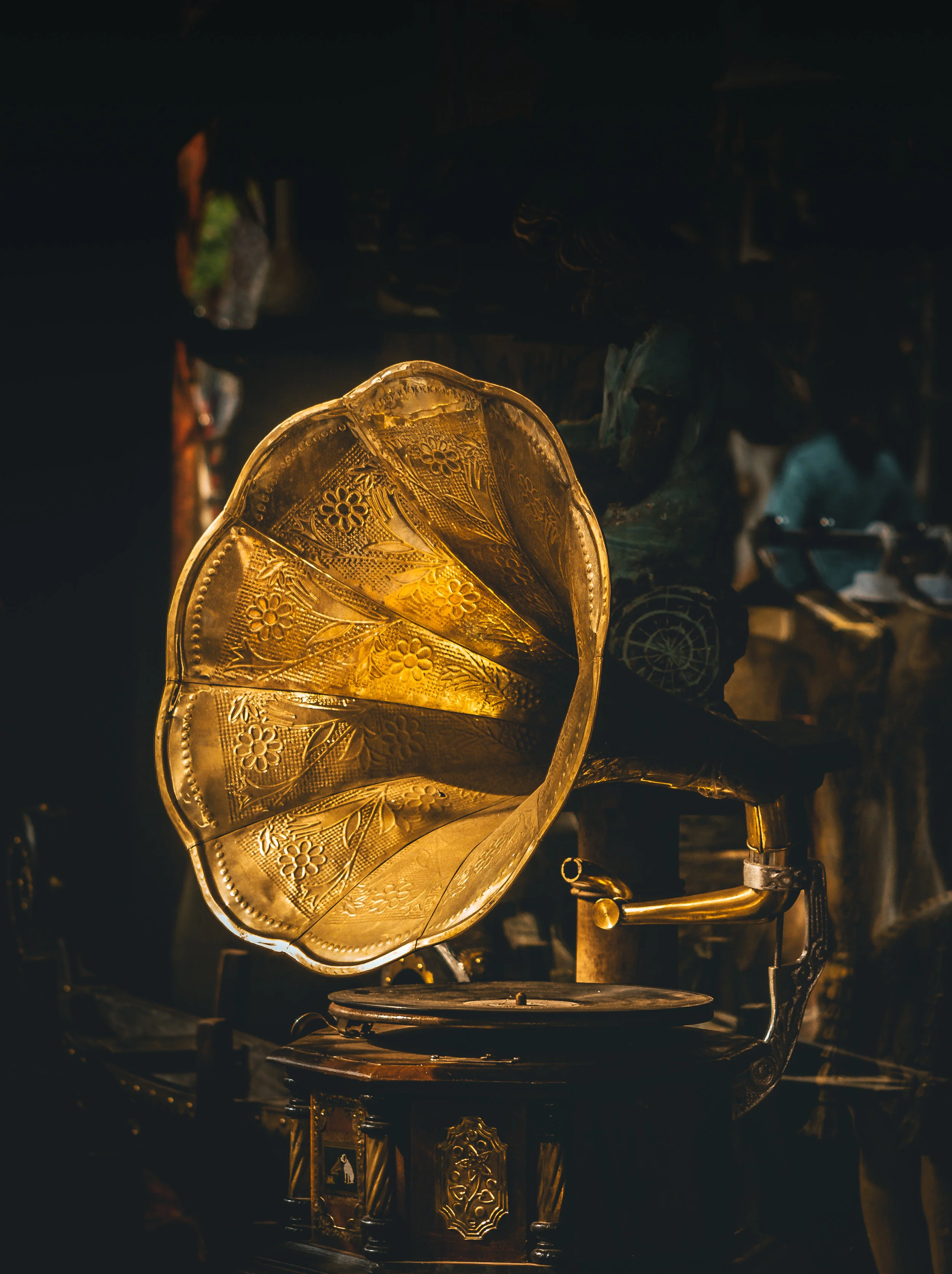
For The Queen’s Gramophone, I decided to write about Hong Kong by similarly evoking a collective nostalgia, in the form of an imaginary gramophone at a nightclub in 1950s Hong Kong, in an imaginary black-and-white Cantonese movie:
“A couple sits at a table in an empty restaurant, staring coldly just beyond each other. To break the silence, the man gestures for the waiter, tips him, and instructs him to turn on the jukebox. The record player teases out an unfamiliar tune. The couple stands up, the woman puts her arms on the man’s shoulders, they begin to dance. They dance, and the evening begins its slow dissolve.”
In memory of Nicholas Maw.
Heard
November 6, 2009, Hong Kong Sinfonietta, with Yip Wing-sie, conductor. Hong Kong City Hall Concert Hall, Hong Kong, China.

Anniversaries (2009)
for sextet and wind ensemble (grade 6 / advanced)
commissioned by the Charles River Wind Ensemble
Live recording by the University of Idaho Wind Ensemble, November 16, 2017, with Paul Thompson, conductor.
Commissioned by the Charles River Wind Ensemble
Team
Solo Sextet: b-flat clarinet, oboe, bassoon, alto saxophone, horn, trombone
Wind Ensemble: piccolo, 2 flutes, 1 oboe, 3 b-flat clarinets, bass clarinet, contrabassoon, alto saxophone, tenor saxophone, baritone saxophone, 3 trumpets, 2 horns, 2 trombones, euphonium, tuba, double bass, timpani, percussion (3 players)
Preface
Anniversaries is a short concerto grosso scored for six solo instruments (clarinet, oboe, bassoon, alto saxophone, horn and trombone) and wind ensemble. I treated the solo sextet as a single composite wind instrument (much like an organ) that plays together as a cohesive unit throughout, blending its six unique colors into one dynamic, breathing musical voice. The counterweight of the full wind ensemble highlights and supports the soloists, but can also obliterate them, maintaining a somewhat precarious relationship between the two sides. The work marks the cyclical passage of time with a recurring sense of bittersweet nostalgia – past memories as perfect pictures framed in a collective imagination.
Anniversaries was commissioned by the Charles River Wind Ensemble in commemoration of its tenth anniversary. The Ensemble premiered the work with conductor Eric Hewitt on June 14, 2009, in Newton, Massachusetts.
Heard
November 16, 2017: University of Idaho Wind Ensemble, Paul Thompson, conductor.
June 14, 2009: Charles River Wind Ensemble, Eric Hewitt, conductor.

Possible Objects (2007)
for saxophone quartet
Team
Saxophone Quartet
Preface
Possible Objects is in two parts. Part One focuses on a single pitch, while Part Two creates a repeated, perpetually-ascending melody constructed from all twelve notes. Part One explores the slight differences in the sound of each instrument; while Part Two combines all four saxophones into a single instrument, trying constantly to reach higher and higher with each repetition of the melody.
(Taking it apart, and putting it back together.)
Possible Objects was written for the Red Clay Saxophone Quartet, and was first performed by the ensemble on March 8, 2007 at Duke University, presented as a part of the 2007 Milestones Festival of Music, sponsored by Duke University and The University of North Carolina at Chapel Hill.
Heard
March 7th-15th, 2009 AM/PM Saxophone Quartet, AM/PM and Rhymes With Opera East Coast Tour
May 11th, 2008 AM/PM Saxophone Quartet, An die Musik LIVE! (Baltimore, MD)
March 4th, 2007 Red Clay Saxophone Quartet, Duke University

Words Become Unlatched (2008)
seven madrigals for mixed voices
commissioned by Volti as part of the Choral Arts Laboratory
Seven Madrigals for Chamber Chorus
Words by Benjamin Rogers
Commissioned by Volti as a part of the Volti Choral Arts Laboratory
Team
Mixed Chorus (SATB)
Preface:
Words Become Unlatched is a set of seven madrigals for unaccompanied chamber chorus, created collaboratively with writer Benjamin Rogers. Throughout the work, the chorus both sings and speaks Mr. Roger’s texts, a varied collection of thoughts and images related to the many relationships that we form in our lives. The creative process began in June, 2007, and included a workshop with the members of Volti, for whom the work was written.
Words Become Unlatched was a result of the 2008 Volti Choral Arts Laboratory commissioning and residency program, and is dedicated to Robert Geary, Mark Winges and the members of Volti.
Heard
May 18-19, 2008 Volti, with Robert Geary, conductor (San Francisco and Berkeley, CA)

Loud Sunsets (2008)
for concert band (grade 4-5)
commissioned by Kappa Kappa Psi - Theta Beta
written for the Boston University Concert Band
Recorded live on April 3, 2008, Duke University Wind Symphony, Emily Threinen, conductor.
Team
1 Piccolo
3 Flute 1
3 Flute 2
2 Oboe 1
2 Oboe 2
3 Clarinet in B-flat 1
3 Clarinet in B-flat 2
3 Clarinet in B-flat 3
1 Bass Clarinet
1 Bassoon 1
1 Bassoon 2
2 Alto Saxophone in E-flat
1 Tenor Saxophone in B-flat
1 Baritone Saxophone in E-flat
3 Trumpet in B-flat 1
3 Trumpet in B-flat 2
2 Trumpet in B-flat 3
2 Horn in F 1
2 Horn in F 2
2 Trombone 1
2 Trombone 2
2 Trombone 3
2 Euphonium
3 Tuba
1 Timpani
1 Percussion 1: Glockenspiel, Vibraphone (motor off), Snare Drum
1 Percussion 2: Crash Cymbals, Large Tam-Tam, Large Triangle, Marimba, Finger Cymbal
1 Percussion 3: Crotales (two-octave set**), Small Tam-Tam, Large Bass Drum, Large Suspended Cymbal (with a dark sound)
Preface
The sunsets in North Carolina are different from the ones that I grew up with in Boston. Even here in Durham, one of the largest cities in the state, tall buildings are few and far between. As I drive home everyday on highway 15-501, when afternoon slowly turns into dusk, the sun settles calmly against an expansive sky. The colors are bright, herds of clouds make their way across the horizon, and the city’s steady turn towards evening has always commanded this commuter’s attention.
Loud Sunsets was written in 2007 for the Boston University Concert Band, Chris Parks, director, commissioned by the Theta Beta Chapter of Kappa Kappa Psi. The work was premiered by the Duke University Wind Symphony with conductor Emily Threinen. I’d like to especially thank the brothers of Theta Beta for making this project possible.
Heard
April 3, 2008, Duke University Wind Symphony, Emily Threinen, conductor (Durham, NC)
April 26, 2008, Boston University Concert Band, Chris Parks, conductor (Boston, MA)

This Evidence (2008)
words by Benjamin Rogers
monologue for chamber orchestra
Monologue For Chamber Orchestra
Words by Benjamin Rogers
Written for a reading and recording session with Alarm Will Sound
Team
Flute, Oboe, B-flat Clarinet, B-flat Bass Clarinet, Bassoon, Horn, B-flat Trumpet, Trombone
Violin, Viola 1*, Viola 2*, Cello*, Double Bass*
(*also speaks)
Preface
for some reason we humans keep on trying to do ourselves harm. we group together and pick fights and dominate our own humanity by regulating, dissecting, and dismembering our fellow humans. we are able to express our outrage of our handling of race or gender issues in the past and simultaneously seek out our most private parts to declare war upon.
so how does one stand up to the interrogations of the many? some protest outwardly while others simply sequester themselves behind some internal wall. either way, we humans also keep on trying to survive.
– Benjamin Rogers
Heard
February 10th, 2009 Alarm Will Sound, in residence at Duke University (recording session)

十年 Ten Years (2007)
poem by Lap Lam
for mixed voices
written for Hong Kong Voices
For Mixed Chorus
Words by 林立 (Lap Lam)
Written for Hong Kong Voices, Ken Lam, artistic director
Team
Mixed Chorus, a capella
Preface
The mountains and the streams, feelings, questions, generations come and go. Ten Years (2007) is a collaboration between poet Lap Lam and composer George Lam. The work consists of two poems: an original, classical-style verse with the same title, and a companion poem written in the contemporary vernacular. While the classical poem reflects on the bygone decade, the accompanying contemporary verse asks pointed questions: how much have we remembered, and how much have we already forgotten?
Ten Years was composed for and dedicated to Ken Lam and Hong Kong Voices.
Heard
June 2, 2007, Hong Kong Voices (Ken Lam, conductor), at the Hong Kong Academy for Performing Arts.
August 11, 2007, Hong Kong Young People’s Chorus (Virginia Cheng, conductor), at the Hong Kong Academy for Performing Arts

Grand Junction (2006)
fanfare for trombone quartet
Team
This work exists in two versions: one for trombone quartet, and one for brass ensemble (3 trumpets, 3 horns, 2 trombones, 1 bass trombone, 1 tuba).
Preface
Grand Junction (2006, revised 2009) was originally written as a short fanfare for trombone quartet, composed at the 2006 Aspen Music Festival for trombonists Louis Bremer, Logan Chopyk, Robert Donnelly and Geoffrey Seelen. The work was first performed on July 11th, 2006, at the Benedict Music Tent in Aspen, Colorado. The current version of Grand Junction is scored for brass ensemble.
Heard
July 11, 2006: Louis Bremer, Logan Chopyk, Robert Donnelly, Geoffrey Seelen, Benedict Music Tent, Aspen Music Festival (Aspen, Colorado)
October 1, 2009: Duke University Wind Symphony (Durham, North Carolina)

Variations On (2006)
words by Benjamin Rogers
chamber concerto for seven players
Chamber Concerto for Seven Players
Words by Benjamin Rogers
Written for the 2006 Aspen Music Festival and School and the 2006 Aspen Contemporary Ensemble
Team
Flute, B-flat Clarinet, Piano, Percussion, Violin, Viola, Cello
(*all players also speak.)
Preface
Variations On (2006) is a chamber concerto for seven players, and was written for the 2006 Aspen Music Festival and the Aspen Contemporary Ensemble. The short movement makes use of five very different strains of text, which are all spoken by the members of the ensemble. Sometimes fragments of these texts overlap. Sometimes the text is incomprehensible. Sometimes the voices are heard over the accompanying music, and at other times the music takes over and becomes the focus. The result could be described as concurrently overhearing different corners of a decidedly very different type of party.
The creative process for Variations On began with my approaching Benjamin Rogers, a writer friend of mine living in Chicago, in March of 2006. We brainstormed ideas for the piece, the texts, the music, the title. Benjamin sends me various sketches of text, and I send him piano renditions of musical fragments for each text. In the end, we decided on five different voices for the piece, and I set out to integrate all of these voices into the work. In 2007, Variations On was adapted for the Hong Kong Sinfonietta, with new Chinese translations and adaptations of the original text by Lap Lam.
Finally, what exactly happens when you hear words and music together? How does one change the meaning of the other?
Heard
October 26, 2007 Hong Kong Sinfonietta, with Yip Wing-sie, conductor.
July 13, 2006 Aspen Contemporary Ensemble, at the Aspen Music Festival and School, with Sydney Hodkinson, conductor.

Momentum Studies (2005)
two movements for three flutes
Team
Flute Trio
Preface
Momentum Studies (2005) contains two contrasting movements. Love is like a machine is rhythmic and pulsating, while Along these lines is calm and connected throughout, with only hints of intensity emerging from the even texture. The three flutes are intertwined in both movements, creating different melodies, rhythms and colors that move constantly among the three players.
Momentum Studies was commissioned by and is dedicated to the Golden Triangle Project, with special gratitude for Brook Ferguson in making this collaboration possible.
Heard
April 19th, 2006, Duke University (Durham, NC)
May 2nd, 2006 Carnegie Mellon University (Pittsburgh, PA)
October 13th, 2006 SCI Student Conference, Arizona State University (Tempe, AZ)
October 6th, 2008 New World Symphony (Miami, FL)

Fog Argument (2004)
poem by Mark Doty
for tenor and piano
Two Songs for Tenor and Piano
on the poem by Mark Doty
For Robert Maril
Team
Tenor and piano
Preface
Fog Argument (2004, Revised 2005) was commissioned by Robert Maril, and was premiered by Robert Maril at the Peabody Conservatory of Music on May 1, 2004.
The work uses the original poem by Mark Doty of the same name, published in the collection Atlantis, used by permission of the author.
Heard
January 27, 2010 Tobenski-Algera Concert Series. Dennis Tobenski, tenor, Marc Peloquin, piano.
September 16, 2005 University of North Carolina at Chapel Hill. Robert Maril, tenor, Michael Trinastic, piano.
May 3, 2004 Peabody Conservatory of Music. Robert Maril, tenor, Robert Muckenfuss, piano.